Heart CT Scan Services
A CT scanner may look intimidating, but it’s simply a powerful, non-invasive tool that allows us to see your heart in detail. At The Keyhole Heart Clinic, we’ll walk you through the heart CT scan so you know exactly what to expect.

KEYHOLE SURGERY
- Coronary Artery Bypass Graft (CABG) Keyhole Surgery
- Keyhole Aortic Valve Replacement Surgery
- Keyhole Atrial Septal Defect (ASD) Repair
- Keyhole Mitral Valve Replacement Surgery
- Keyhole Tricuspid Valve Repair & Replacement Surgery
- Mitral Valve Repair
- Quadruple Heart Bypass Surgery
- Triple Bypass Surgery
HEART CONDITIONS
What is a Cardiac CT Scan?
A Computerised Tomography (CT) scanner is a type of X-ray machine that scans the body for detailed images that can’t be seen externally.
A cardiac CT scan (or CT scan of the heart) enables doctors to visualise your heart using X-rays. These detailed images provide an overview of what your heart and other major structures look like without the need for surgery.
A cardiac CT scan focuses on the chest, specifically on your heart and blood vessels, to further investigate heart symptoms. Medical imaging can help your doctor discover certain conditions that may explain your symptoms.
This includes conditions such as:
- Congenital heart disease
- Tumours
- Birth defects
Types of Heart CT scans
Types of cardiac CT scan procedures include:
- CT coronary angiograms directly visualise your heart’s arteries and any plaque (fatty deposits)
- CT calcium scores measure calcium buildup in coronary arteries, an early marker of a heart attack, high blood pressure, stroke and cardiac death.
Here at The Keyhole Heart Clinic, a coronary angiogram is often used in our heart screening service to diagnose silent or symptomatic coronary artery disease.
Cardiac CT Scan Risks
The risks associated with heart CT scans are very low, but they still carry a small risk of radiation exposure.
With a CT coronary angiogram, a contrast iodine dye is injected into the bloodstream. The procedure is not recommended for those with:
- Kidney issues: Kidney disease is a significant risk factor, as the dye may worsen kidney function. A blood test beforehand can check safety.
- Severe iodine allergy: Allergic reactions such as nausea and itching
- Asthma: Higher risk of allergy-type reactions to the dye or other substances
There may also be a warm sensation or pain at the injection site, as well as a metallic taste in your mouth. Some individuals may have trouble breathing during the procedure.
The dye is flushed naturally out of the body by the kidneys, so unless a patient has a severe allergy to iodine, the risk is minimal. Calcium scoring does not require the use of dye, so it is safe for most patients.
Pregnancy Screening Protocol
If you’re a woman who could become pregnant, we’ll ask about your pregnancy status before your CT scan. European guidelines require us to check this because CTs use X-rays.
Medications Used During Cardiac Computed Tomography
To obtain the clearest images, your doctor may use heart rate-lowering medications (β-blockers or calcium channel blockers) and vasodilators (e.g. a spray medication like nitroglycerin). Patients are screened for contraindications. While severe reactions are rare, mild side effects can include:
- Headache
- Flushing
- Low blood pressure
Preparing for a Heart CT Scan
Proper preparation helps ensure clear images and a smooth experience. Here’s what to know before and during your cardiovascular CT scan:

Before your appointment:
- Fasting: If your scan involves the use of contrast dye (such as a coronary angiogram), fast for at least 4 hours before the procedure.
- Hydration: Drink plenty of water even while fasting.
- Avoid caffeine: For non-contrast CTs (such as calcium scoring), you may eat normally but avoid caffeine, as it can increase your heart rate and impact image quality.
On the day of your appointment, please remove any metallic objects such as watches, jewellery and glasses. If you are unsure about certain metallic items, consult your doctor.
What to Expect During a Private Heart CT Scan
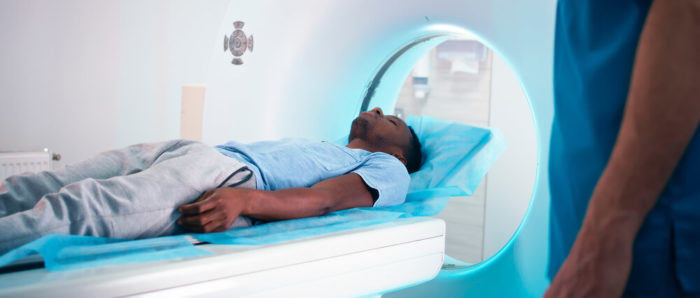
Having the scan is quite straightforward and generally takes less than an hour from start to finish. Here is what to expect during the procedure:
- You’ll need to remove items of clothing and wear a hospital gown.
- Electrodes are attached to your chest; these small patches monitor your heart.
- You may be given a beta-blocker to help slow your heart rate to improve the quality of the images.
- An IV catheter may be inserted into your leg or arm for the dye to be injected.
- You’ll be placed on a narrow table to lie down, and straps may be used to help reduce movement, whilst also ensuring you feel comfortable before the scan begins.
- The table moves through the CT scanner while it rotates over your chest, capturing detailed images of your heart.
The process shouldn’t take longer than an hour, depending on the complexity of the procedure. The table may need to move in and out of the CT machine multiple times for the best results.
Patient Tips for a Successful Heart CT Scan
Following a few simple steps can make your heart CT quicker, safer, and produce the clearest images:
- Stay still: Movement can blur the images. You’ll be asked to lie still while the table moves and the scanner makes noise.
- Breathing practice: You may be asked to hold your breath briefly. We’ll practice this with you first to ensure clear images and reduce motion artefacts.
- Avoid slow exhalation during breathholds, which can cause blurring.
- Your technologist will guide you on breath-holding to reduce image blur.
- Relax: Staying calm helps lower your heart rhythm, enabling the machine to create detailed images.
After the Scan
Once the scan is complete, the technician will review the images, and the test results can then be assessed in more detail. You’ll generally be able to continue normal activities after the process. Any dye used will naturally flush from your body.
Hydrate: You need extra fluids to help speed up the process of flushing out the dye.
When Would I Need a Private Cardiac CT Scan?
As there can be many different conditions that could explain your symptoms, cardiac CT scans can assist in discovering the root of the problem. This will then ensure your doctor can accurately diagnose and recommend the correct solutions to help resolve your heart issue.
A CT scan can:
- Diagnose and monitor the use of treatments for conditions such as heart disease
- Study blood vessels and the internal structure of your heart
- Discover any concerns such as lumps, tumours, or defects in their heart’s development
- Provide detailed images of your heart to make it simpler to decide on the correct treatment
Cardiac CT scans use a number of detectors to be able to create the required image. The more detectors used, the clearer the image of your heart will be.
CT Scans FAQs
What is the difference between a CT and an MRI scan for the heart?
Both tests are generally safe, accurate, and chosen based on your doctor’s clinical question.
- A computed tomography (CT) scan uses X-rays to create fast, detailed pictures of the heart and blood vessels. With contrast dye, it shows if the coronary arteries are narrowed or blocked. There is a small risk of radiation.
- A magnetic resonance imaging (MRI) scan utilises strong magnets and radio waves, rather than radiation. It provides clear images of the heart muscle, allowing for the detection of scarring, inflammation, or damage after a heart attack.
Which one to use: CT is usually chosen for speed and artery imaging. MRI is preferred for assessing heart muscle health and function.
Can you drive home after a heart CT scan?
Yes, you can drive home. A heart CT is a simple, painless scan with no recovery time.
The Keyhole Heart Clinic: Heart Health Team You Can Trust
Cardiac CT scans are an essential way to investigate and diagnose your reported symptoms associated with your heart. If you experience chest pain regularly or tightness, a heart CT scan can help you discover the cause of the issue.
Here at The Keyhole Heart Clinic, we routinely use CT scanning to assess your suitability for keyhole heart surgery.
The leading cardiologist, Mr. Birdi, leads our clinic. He has over 20 years of experience in keyhole heart surgery, a minimally invasive procedure. These include:
-
Keyhole coronary bypass surgery (from single to quadruple bypass)
To undergo a heart CT scan or get a second opinion from a specialised healthcare team on a recent diagnosis, please book a consultation today.
Services
How We Can Help You

Coronary Artery Bypass Graft (CABG) Keyhole Surgery
Keyhole Aortic Valve Replacement Surgery

Keyhole Atrial Septal Defect (ASD) Repair
Keyhole Mitral Valve Replacement Surgery

Keyhole Tricuspid Valve Repair & Replacement Surgery
Mitral Valve Repair
Quadruple Heart Bypass Surgery