Keyhole Heart Surgery in London
Keyhole heart surgery, also known as minimally invasive cardiac surgery, uses small incisions between the ribs instead of breaking the breastbone. At The Keyhole Heart Clinic, our team specialises in keyhole techniques for treating valve disease, coronary artery disease and heart rhythm conditions.
View our cardiac care services, minimally invasive cardiac surgery and heart screening programmes below.
The information on this page is for general guidance only and does not replace an individual clinical consultation. Mr Inderpaul Birdi (GMC No. 3407978) will assess your suitability for minimally invasive treatment options at your appointment.
Last reviewed by Mr Birdi: March 2026
Learn more about keyhole heart surgery
2 Weeks
is the average surgery wait time*
1500
minimally invasive procedures
100+
5-star patient reviews.
Read now
35 Years
of clinical and surgical experience

Coronary Artery Bypass Graft (CABG) Keyhole Surgery
Keyhole Aortic Valve Replacement Surgery

Keyhole Atrial Septal Defect (ASD) Repair
Keyhole Mitral Valve Replacement Surgery

Keyhole Tricuspid Valve Repair & Replacement Surgery
Mitral Valve Repair
Quadruple Heart Bypass Surgery
Triple Bypass Surgery


Coronary Artery Bypass Graft (CABG) Keyhole Surgery
Patients who develop narrowed heart arteries often require surgery to bypass them. In 2022, Mr Birdi performed the UK’s first quadruple heart bypass through keyhole techniques.
Keyhole Aortic Valve Replacement Surgery
This treats aortic valve stenosis, aortic valve regurgitation, and some congenital valve defects. Surgeons replace the damaged valve using minimally invasive techniques through small incisions between the ribs, where suitable.
Keyhole Atrial Septal Defect (ASD) Repair
An atrial septal defect is a hole between the heart’s upper chambers that can overload the right side of the heart with blood. Keyhole ASD repair closes the defect using minimally invasive surgery through small incisions between the ribs.
Keyhole Mitral Valve Replacement Surgery
Used to treat mitral valve stenosis, mitral valve regurgitation or severe mitral valve prolapse. Surgeons replace the valve using minimally invasive methods that may avoid opening the breastbone in suitable patients.
Mitral Valve Repair
Often recommended for mitral valve prolapse or mitral valve regurgitation. Surgeons restore the function of the natural valve, often using minimally invasive techniques that may avoid opening the breastbone.
Tricuspid Valve Repair & Replacement Keyhole Surgery
Treats tricuspid valve regurgitation and other tricuspid valve disease. In valve procedures, the surgeon may repair the existing valve or implant a replacement valve, depending on the severity of the disease and the patient’s anatomy.
Quadruple Bypass Keyhole Cardiac Surgery
Recommended for extensive coronary artery disease affecting four coronary arteries. This complex keyhole heart surgery restores circulation to multiple areas of the heart and is used when several vessels supplying the heart muscle are severely narrowed or blocked.
Triple Bypass Keyhole Heart Surgery
Used when three coronary arteries are significantly narrowed due to coronary artery disease. Triple bypass keyhole heart surgery improves blood flow to the heart muscle and may relieve symptoms such as angina while reducing the risk of a heart attack.
Keyhole Atrial Fibrillation Treatment
Atrial fibrillation (AF) is a common abnormal heart rhythm problem. There are various minimally invasive treatments, like keyhole AF ablation, as well as a hybrid treatment with keyhole heart surgery and catheter ablation.
Keyhole Atrial Septal Defect (ASD) Closure
An atrial septal defect is a hole in the wall between the two upper chambers of the heart, causing abnormal blood flow. There are two closure options, depending on the type and location of the defect: keyhole heart surgery and cardiac catheter ablation.
Supportive Heart Health Therapies & Services
01 HEART SCREENINGS
Increasingly, doctors are recognising that early diagnosis can often prevent the secondary effects of latent cardiac problems. Our comprehensive heart screening and our Cardiac Longevity Programme are designed to potentially detect issues early, helping you take control of your heart health.
02 CARDIAC REHABILITATION
We endorse supervised rehabilitation after keyhole heart surgery in line with NICE guideline NG185 and BACPR standards. A GMC-registered nurse will guide you through a personalised programme covering exercise, cardiovascular risk management and nutrition.
03 NUTRITION & PREVENTATIVE MEASURES
Our team of registered dietitians and cardiac nutritional therapists specialise in cardiovascular health. They can work with you directly, before and after your keyhole heart surgery. The goal is to address your concerns and support your well-being and long-term health.
Minimally Invasive Heart Surgery At The Keyhole Heart Clinic
At The Keyhole Heart Clinic, our expertise enables us to provide a wide spectrum of cardiac services and minimally invasive procedures.
Our experienced surgical team is led by Clinical Lead, Director and Founder Inderpaul Birdi. He is an innovator in minimally invasive techniques,
with over 20 years of experience in keyhole surgery for a variety of heart conditions.
Suitability for Keyhole Surgery
Not every patient is suitable for keyhole heart surgery. The most appropriate treatment is determined through a specialist pre-operative assessment and imaging to understand the pattern of coronary artery disease and overall anatomy.
Most patients will undergo the following tests:
These scans help the surgical team determine whether minimally invasive procedures are appropriate. If keyhole surgery is not suitable, other approaches, including hybrid procedures or conventional breastbone (sternotomy) surgery, may be recommended.
Conditions Treated with Keyhole Heart Surgery
Minimally invasive procedures may be used to treat conditions that cause symptoms such as:
- Chest pain caused by coronary artery disease
- Valve disease that affects blood flow through the heart
- Abnormal heart rhythms such as atrial fibrillation
- Complications that may eventually contribute to heart failure if left untreated
Getting a Keyhole Heart Surgery Consultation
If you are considering keyhole heart surgery, you can:
- Ask your cardiologist or heart surgeon, including within the NHS, whether a minimally invasive approach may be suitable for your condition.
- Request a second opinion from a specialist centre experienced in keyhole cardiac surgery.
- Seek independent advice, where your scans can be reviewed to determine whether minimally invasive techniques may be an option for you.
Hospital Locations for Keyhole Cardiac Surgery
We can treat patients at cardiac hospitals in London and across the UK, depending on the procedure and patient needs.
Minimally invasive Keyhole heart surgery may be performed at:
-
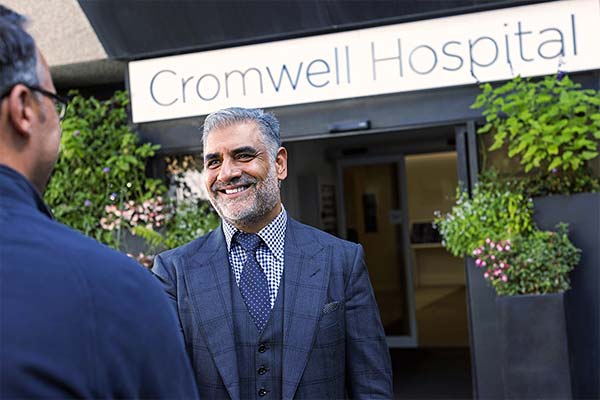
Cromwell Hospital
-
The Harley Street Clinic
-
The Wellington Hospital
-
Nottingham City Hospital
-
Clinics in Essex
-
Clinics in Harrogate
Consultations and surgical procedures are arranged according to the most appropriate location for each patient.
Patient Path to Minimally Invasive Heart Procedures
We follow a clear consultation-to-treatment pathway to ensure every patient receives careful assessment, personalised treatment planning, and ongoing support.
Stage 1: Book Your Consultation
Appointments are available face-to-face at our London clinic or other locations, or via secure online video consultation.
Stage 2: Your Consultation
Your consultant will review your history, assess your symptoms, and carry out a clinical examination. You are welcome to bring someone with you, and a chaperone is always available on request.
Stage 3: Your Treatment Plan
You will receive a personalised plan that includes a full review of your existing results, any further investigations needed, and an assessment of your suitability for keyhole heart surgery. Where clinically appropriate, surgery can typically be arranged within 10–14 days.
Stage 4: Your Surgery
Most patients stay in the hospital for five to seven days, depending on the procedure. You will be cared for by a specialist multidisciplinary team experienced in both keyhole and traditional heart surgery, with access to on-site clinical expertise across all disciplines.
Stage 5: Ongoing Support
After being discharged, you will have direct access to your surgical team through our dedicated patient portal. We are here to support the recovery process, which is different for each patient.
Stage 6: Cardiac Rehabilitation
Cardiac rehabilitation is a vital part of your post-operative care. We recommend supervised rehabilitation for all patients following keyhole heart surgery.
Watch videos from our experts to better understand the treatments as well as the severe heart disease and conditions we treat.
FAQs
To find out more about cardiothoracic keyhole surgery, read our answers to the most common questions we get from our patients.
What is keyhole heart surgery?
Cardiac keyhole surgery is a minimally invasive technique that uses small openings between the ribs instead of a large incision through the breastbone. Surgeons operate through these openings using specialised instruments and cameras.
This approach helps minimise disruption to surrounding tissues while still allowing precise treatment of cardiac structures, such as the valves and the aorta.
Many patients may experience less pain, smaller scars and may support a faster recovery in suitable patients compared with traditional open-heart surgery, depending on their individual condition.
What is the keyhole heart surgery recovery timeline?
For some patients, full recovery can take about two weeks. Many patients gradually return to normal life after recovering from cardiac keyhole surgery.
Because the procedure avoids dividing the breastbone, patients may experience less postoperative discomfort and greater overall comfort during recovery. Cardiac rehabilitation programmes can also support long-term cardiovascular well-being.
In comparison, open heart surgery involves breaking the breastbone, which means prolonged recovery times. Some patients can take up to 12 weeks to recover.
What are the risks of heart keyhole surgery?
While keyhole heart surgery is less invasive, it still carries risks, such as:
-
Bleeding
-
Infection, blood clots
-
Heart attack
-
Stroke
-
Potential damage to surrounding organs.
What are the benefits of keyhole procedures compared to open-heart surgery?
Compared with traditional open-heart procedures requiring a large incision, keyhole heart surgery may offer significant benefits for suitable patients.
These may include:
-
Avoids full breastbone division (sternotomy): Traditional open heart surgery involves breaking the breastbone, which takes up to 12 weeks to heal. Keyhole procedures avoid this, making small incisions on the side of the chest. This means no broken bones and a much faster recovery.
-
Smaller scars: These less invasive procedures use a small incision, typically around 3 inches, instead of the standard 12-inch incision associated with open-heart surgery.
-
Less pain and bleeding: Since the breastbone is left intact, patients typically experience less bleeding and pain during recovery. This can make the healing process easier and more comfortable.
-
May provide reduced risk of infection: With no broken bones and smaller wounds, there’s a lower risk of wound infection or serious complications like bone infection.
-
Quicker recovery and shorter hospital stay: Most patients undergoing minimally invasive heart procedures can return home sooner, and some resume normal activities within two weeks. In contrast, recovery from traditional open-heart surgery can take several months.
When performed by an experienced surgeon, keyhole heart surgery is a safe and effective alternative.
Which is better, robotic or keyhole heart surgery?
Both keyhole and robotic heart surgery are minimally invasive procedures.
Consultant cardiac surgeon Mr Birdi notes that keyhole mitral valve repair, performed by hand, still delivers better results than robotic tools. The procedure involves a small incision, causing less trauma and offering a quicker recovery. Robotically assisted heart surgery, while advanced, often takes longer and doesn’t always lead to better outcomes.
A review in ScienceDirect supports this. Robotic surgery is safe and effective, but its success depends heavily on the heart surgeon’s experience. Learning to use the robot well takes time. Advanced medical technology alone doesn’t guarantee better results.
If you require our expertise and more information on private keyhole heart surgery in the UK, please contact us at +44 (0)20 8079 7860.
Medically reviewed by Mr Inderpaul Birdi, MBBS, MD, FRCS (CTh)
Consultant Cardiothoracic Surgeon | Clinical Lead, The Keyhole Heart Clinic
GMC Registration: 3407978
Mr Inderpaul Birdi is a Fellow of the Royal College of Surgeons with over 20 years’ experience as a Consultant Cardiac Surgeon in keyhole techniques. He trained at the Royal Papworth Hospital and the Royal Brompton Hospital.
As Clinical Lead at The Keyhole Heart Clinic, he is committed to evidence-based care and clear, patient-focused information.