


Keyhole Aortic Valve Replacement vs Open Surgery: Which Is Better for Aortic Stenosis?
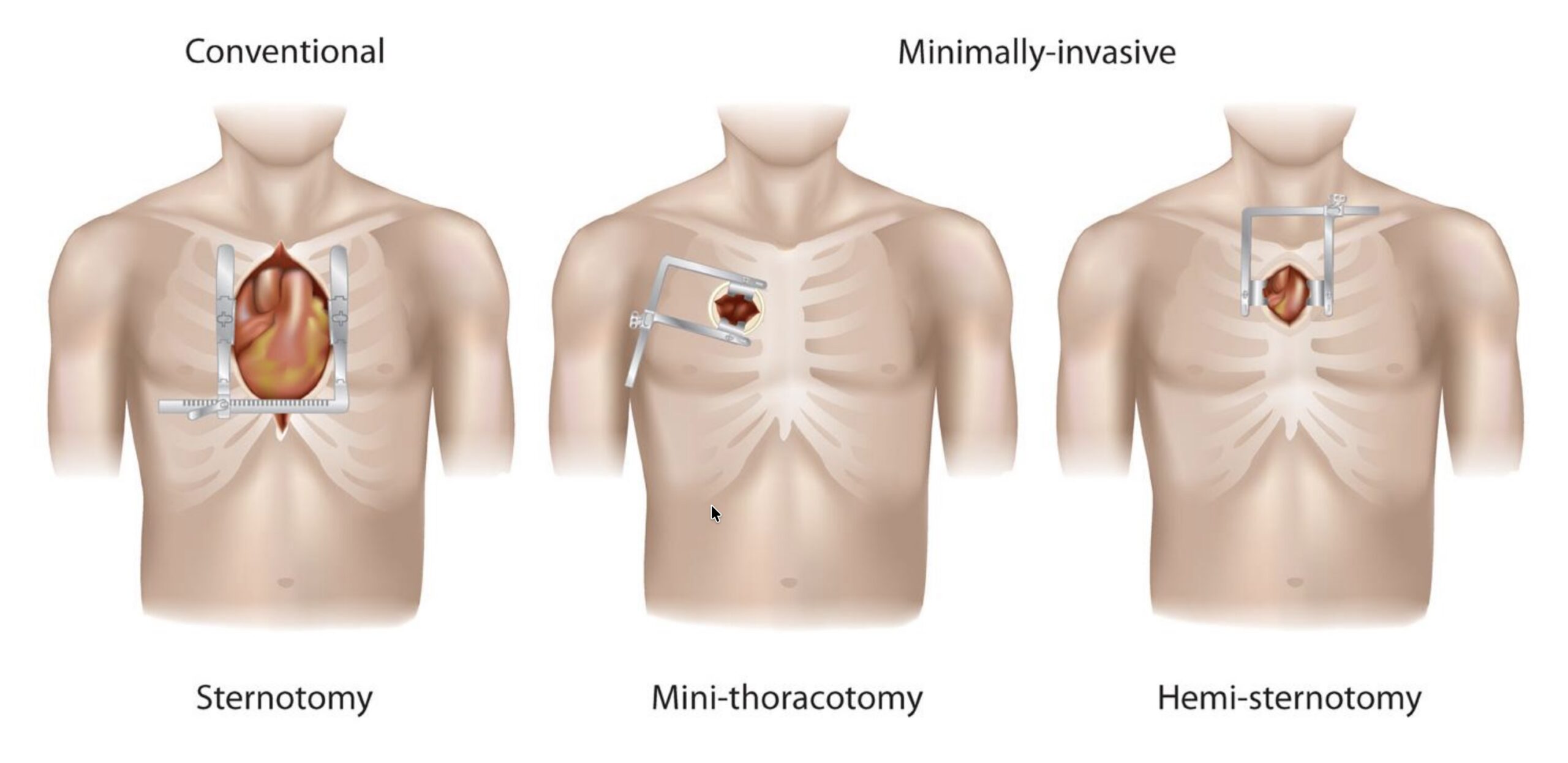

Is keyhole aortic valve replacement versus open surgery by sternotomy a better option for the treatment of aortic stenosis? Let us start by defining the condition, aortic stenosis and explain when we decide when and how to treat this common heart valve problem.
Aortic stenosis, the gradual narrowing of the aortic valve, is one of the most common serious heart conditions in adults over 65, yet many people live with a deteriorating valve for years before the warning signs become impossible to ignore. If you have been told you have stenosis of the aorta, or aortic stenosis as it is more commonly known, you may have found that once a cardiologist recommends a valve replacement, the conversation moves quickly towards surgery. For many patients, the assumption is that open-chest surgery is simply what happens next. That assumption is worth questioning.
The gap between “you need a valve replacement” and “you need a full sternotomy” is wider than most patients expect. At The Keyhole Heart Clinic, led by cardiothoracic surgeon Mr Inderpaul Birdi, the team has performed over 2,000 minimally invasive cardiac procedures across sites in London, Nottingham, and Essex. Some patients report having been told initially that open surgery was their only option before a specialist review revealed alternatives. By the end of this article, you will understand how aortic stenosis is diagnosed and graded, what the treatment options genuinely involve, and how to have a properly informed conversation with your clinical team before committing to any procedure.
What aortic stenosis is and who develops it
The aortic valve sits at the exit of the heart’s main pumping chamber, the left ventricle, controlling blood flow into the aorta and on to the rest of the body. Over time, calcium deposits and fibrous tissue can build up on the valve leaflets, causing them to stiffen and the valve opening to narrow. The heart compensates by working harder to push blood through the restricted passage, which places sustained strain on the left ventricle and, over years, begins to compromise its function.
The three main causes of aortic stenosis
Degenerative calcific disease is the dominant cause in the UK, typically presenting after the age of 65 as calcium gradually accumulates on a previously normal three-cusped valve. Congenital bicuspid aortic valve affects approximately 0.5 to 2% of the population and causes stenosis significantly earlier, often between the ages of 40 and 60, because the two-cusp structure is mechanically disadvantaged from the outset. Rheumatic valve disease, once common, is now rare in the UK, though it remains significant in some lower-income regions.
Risk factors overlap substantially with those for atherosclerosis: hypertension, elevated LDL cholesterol, smoking, diabetes, obesity, and chronic kidney disease all contribute to the calcification process.
How common is this condition in the UK?
Approximately 25% of people over 65 have aortic sclerosis, the precursor lesion where the valve shows early thickening without significant flow obstruction. Around 3 to 5% of those over 65 have clinically significant aortic stenosis, and prevalence rises steeply with age, with most symptomatic cases diagnosed in patients in their seventies and eighties. Knowing the risk factors allows for earlier monitoring and, where needed, earlier intervention before the condition reaches a critical point.
Symptoms of aortic stenosis to recognise, and red flags that need urgent attention
The prognosis of aortic valve disease shifts dramatically once symptoms appear. Untreated symptomatic severe aortic stenosis carries roughly 25 to 50% mortality in the first year and greater than 50% mortality by two years in many older patient groups. A murmur alone does not define prognosis; it is the combination of symptoms, echocardiographic severity, and ventricular function that determines urgency.
The classic symptom triad of aortic valve disease
Advanced aortic stenosis typically declares itself through three hallmark symptoms, each reflecting a different way the failing valve stresses the body. Exertional breathlessness, or a noticeable drop in exercise tolerance, is often the first sign, and it is frequently dismissed as deconditioning or simply getting older. Angina follows for many patients: exertional chest tightness or pressure, sometimes spreading to the arm, neck, or jaw, driven by the heart’s increased oxygen demand through a narrowed outflow. Syncope or presyncope during physical effort is the most alarming presentation, reflecting the heart’s inability to increase cardiac output on demand.
Less obvious but equally important signs include unusual fatigue, palpitations, ankle swelling, and an inability to lie flat at night. Because these symptoms develop gradually and overlap with common age-related complaints, they are sometimes attributed to getting older rather than to a narrowing valve. If you recognise any combination of these in yourself or someone close to you, the next step is an echocardiogram, not reassurance.
Symptoms that require same-day or emergency assessment
Fainting during exertion, severe or persistent chest pain, sudden breathlessness at rest, suspected pulmonary oedema, any collapse, or sustained rapid palpitations accompanied by dizziness all warrant emergency care without delay. New or worsening exertional breathlessness in someone already known to have severe aortic stenosis should prompt a same-day medical review. Avoid strenuous physical activity until you have been assessed if severe aortic stenosis is suspected or confirmed.
How echocardiography confirms and grades aortic stenosis
A transthoracic Doppler echocardiogram is the standard tool for diagnosing and grading aortic stenosis. It is non-invasive, reproducible, and provides the three measurements that determine how advanced the condition is and whether intervention should be considered, making it the most clinically informative single test available for aortic valve assessment.
The three key measurements and what they mean
Peak aortic jet velocity measures how fast blood travels through the narrowed valve. In severe aortic stenosis, this reaches 4.0 metres per second or above, compared with 2.6 to 2.9 m/s in mild disease. Mean transvalvular gradient reflects the pressure difference the heart must generate to overcome the obstruction: severe stenosis produces 40 mmHg or above. Aortic valve area estimates the actual opening available for blood flow: severe stenosis reduces this to 1.0 cm² or below, or an indexed area of 0.6 cm²/m² or below when adjusted for body size.
All three values should point in the same direction. When they do not, further testing, such as dobutamine stress echocardiography or CT calcium scoring, is required to clarify the true severity, particularly in low-flow, low-gradient cases where the gradient appears deceptively normal despite a critically small valve area.
Mild, moderate, and severe: what each grade means in practice
Mild aortic stenosis, with a peak velocity of 2.6 to 2.9 m/s and a valve area above 1.5 cm², is managed with regular echo surveillance and attention to cardiovascular risk factors. Moderate stenosis, with a peak velocity of 3.0 to 4.0 m/s and a valve area of 1.0 to 1.5 cm², sits in a watchful waiting phase with more frequent monitoring. Severe aortic stenosis triggers active discussion about intervention, particularly once symptoms develop. Knowing your grade gives you the basis for a structured conversation with your clinical team about timing and treatment options.
When to intervene and how to choose between TAVI and surgical replacement
Current guidance from the ESC (updated 2025) and NICE (NG208, updated 2026) is broadly aligned: intervene in symptomatic severe aortic stenosis, and consider earlier intervention in specific asymptomatic patients. The decision is always made by a multidisciplinary heart team, not by a single clinician, and the choice of procedure depends on anatomy, age, frailty, life expectancy, and patient preference.
The thresholds that indicate intervention is needed for aortic stenosis
Symptomatic severe aortic stenosis with concordant echo findings is the clearest indication for valve replacement. In asymptomatic patients, intervention is considered when left ventricular ejection fraction drops below 50% (with some guidelines supporting consideration below 55% in specific clinical contexts, refer to ESC 2025 and NICE NG208 for the applicable thresholds), when exercise testing unmasks symptoms or an abnormal blood pressure response, when peak velocity exceeds 5.0 m/s or mean gradient reaches 60 mmHg or above, or when BNP or NT-proBNP rises to more than twice the upper limit of normal without another explanation. Moderate aortic stenosis alone is generally managed with surveillance unless the patient is already undergoing a concurrent cardiac procedure such as coronary bypass.
Transcatheter versus surgical replacement: the decision framework
TAVI (transcatheter aortic valve implantation) delivers a new valve via a catheter through the femoral artery, avoiding open-chest surgery entirely. Hospital stays typically run one to three days, with most patients returning to light normal activities within one to two weeks, though individual recovery depends on age, frailty, and access route. SAVR (surgical aortic valve replacement) replaces the valve through a chest incision, traditionally via full sternotomy, with hospital stays of five to ten days and a recovery period of six to twelve weeks as the breastbone heals.
NICE currently recommends SAVR as first-line for low or intermediate surgical risk patients, and TAVI for those at high surgical risk or unsuitable for surgery. ESC 2025 guidance generally favours TAVI for patients aged 75 and above or those at elevated surgical risk, and SAVR for younger patients, those with bicuspid valves, or when coronary bypass or another cardiac operation is needed simultaneously. TAVI carries higher rates of paravalvular leak and permanent pacemaker implantation; SAVR is associated with more bleeding, acute kidney injury, and new-onset atrial fibrillation. Long-term valve durability data is more firmly established for SAVR, a consideration that carries considerable weight in younger patients who may outlive a bioprosthetic TAVI valve.
Why keyhole surgical replacement is changing the picture for suitable patients
For patients who are surgical candidates but want to avoid a full sternotomy, minimally invasive keyhole aortic valve replacement offers a third path. This approach delivers the durability of surgical valve replacement, established through decades of SAVR outcome data, through a small incision, without dividing the entire breastbone. Compared with conventional open surgery, minimally invasive SAVR is associated with comparable rates of major complications, and published meta-analyses report shorter hospital stays, less postoperative blood loss, and reduced rates of new-onset atrial fibrillation. Recovery is meaningfully faster than full sternotomy, though direct comparison with TAVI timelines varies by patient and procedure.
What the procedure involves and who is a suitable candidate
Keyhole aortic valve replacement is performed through a small incision between the ribs or via a mini-sternotomy, rather than a full chest opening. The surgical precision and valve durability are equivalent to conventional SAVR; what changes is the access route and the recovery experience. Good candidates are generally patients with symptomatic severe aortic stenosis at low to intermediate surgical risk whose anatomy supports the approach and who have a clear interest in returning to normal life as quickly as possible. This approach suits active patients, someone in their late sixties who cannot afford a three-month recovery, for instance, for whom TAVI may not be the most durable long-term solution.
Mr Inderpaul Birdi and The Keyhole Heart Clinic’s approach
Mr Birdi is the lead cardiothoracic surgeon at The Keyhole Heart Clinic, with more than 25 years of experience and over 2,000 minimally invasive cardiac procedures performed across his career. His work has been featured on Channel 5 “The Surgeon” recently and received extensive positive reviews. The clinic operates from London, Nottingham, and Essex, making specialist keyhole aortic valve surgery accessible across a broad geography. The focus is consistently on patient outcomes: reduced hospital stays, a faster return to normal life, and the reassurance of working with a surgeon whose clinical specialism, not sideline, is minimally invasive cardiac surgery.
Patient Experiences: Aortic Stenosis and Keyhole Aortic Valve Replacement
For patients diagnosed with aortic stenosis, understanding the different treatment options is important, but hearing from people who have already been through the process can be particularly reassuring.
At The Keyhole Heart Clinic, Mr Inderpaul Birdi has treated patients requiring aortic valve replacement using minimally invasive surgical techniques, including a right anterior minithoracotomy, which allows access to the aortic valve through a small incision between the ribs with multiple independently collected testimonial 5 star reviews.
Jan’s experience was particularly fascinating and illustrates recovery after keyhole aortic valve replacement under the care of Mr Birdi and the team at The Keyhole Heart Clinic. Following surgery through a small incision between the ribs, Jan returned home on postoperative day four. Remarkably, on day five, she recorded herself singing a technically demanding musical piece. Mr Birdi subsequently shared her recovery story, describing how encouraging it was to see her breathing comfortably and returning to an activity she loved so soon after major heart surgery.
These personal experiences demonstrate what keyhole aortic valve replacement can mean to individual patients. Although recovery varies and no surgical approach guarantees a particular outcome, minimally invasive techniques may reduce chest wall disruption and help suitable patients return to everyday activities sooner than after conventional full sternotomy.
For anyone diagnosed with severe aortic stenosis, the first step is to establish whether keyhole aortic valve replacement is an appropriate option for their anatomy, overall health and long-term treatment needs.
“I see, first hand, the dramatic difference that minimally invasive aortic valve replacement offers to suitable patients:
smaller scars that heal quicker, produce less pain, and far quicker recovery often in days and weeks rather than several months…
…And the psychological of knowing that you are suitable for keyhole cannot be underestimated.”
Inder Birdi, Consultant Cardiac Surgeon
When a second opinion is worth seeking
Seeking a second opinion before committing to any form of valve replacement surgery is entirely reasonable and, for many patients, genuinely changes the outcome. The choice between TAVI, open SAVR, and minimally invasive surgical replacement involves technical, anatomical, and personal factors that benefit from a specialist perspective, particularly if the original recommendation was made without discussing keyhole options.
Questions worth raising before you commit to a procedure
Before your next clinical appointment, consider asking the following. Is my anatomy suitable for a keyhole surgical approach? What are the risks specific to my age, fitness level, and valve type? Given my age, what is the realistic valve durability, and what does reintervention involve if it is needed in ten or fifteen years? What is the surgeon’s personal procedural volume and specific experience with minimally invasive aortic valve replacement? These questions shift you from a passive recipient of a recommendation to an active participant in a decision that will shape your recovery and your quality of life.
Arranging a consultation at The Keyhole Heart Clinic
The Keyhole Heart Clinic offers specialist second-opinion consultations both in-clinic across its London, Nottingham, and Essex sites and online for patients who cannot attend in person, including those travelling from abroad. Mr Birdi and the team will review your existing echo reports, CT scans, and clinical notes, and provide an independent assessment of whether a keyhole approach is appropriate and what your realistic recovery pathway looks like. This is a structured clinical consultation, focused entirely on giving you an accurate and honest picture of your options.
The right choice starts with the right information
Aortic stenosis is serious once symptoms appear, but early recognition and a well-considered treatment plan can restore quality of life significantly. The narrowing of the aortic valve is not a single event with a single solution; it is a condition with grades, thresholds, and multiple treatment pathways that depend on your specific anatomy, age, and priorities.
The distance between “you need a valve replacement” and “you need open-chest surgery” is not as small as many patients assume. Minimally invasive keyhole aortic valve replacement offers the established durability of surgical valve replacement with a recovery experience that is meaningfully closer to TAVI than to conventional open surgery, for the right patient, it resolves the tension between clinical robustness and getting back to normal life.
If you have been diagnosed with severe aortic stenosis, told that your valve area or gradient has crossed a threshold for intervention, or advised to consider surgery without a full discussion of minimally invasive options, a specialist second opinion may be exactly what clarifies your path forward. Speak to the team at The Keyhole Heart Clinic to understand every option before you decide.
Frequently asked questions about aortic stenosis
What is the difference between aortic stenosis and aortic sclerosis?
Aortic sclerosis refers to early thickening and calcification of the aortic valve leaflets without significant obstruction to blood flow. Stenosis of the aorta, or aortic stenosis, occurs when that narrowing progresses to the point where it restricts flow measurably, producing the haemodynamic changes that lead to symptoms and require monitoring or intervention.
Can aortic stenosis be treated without surgery?
There is currently no medication that reliably slows the progression of aortic stenosis or reverses valve narrowing. Managing cardiovascular risk factors may reduce the rate of progression, but once the condition reaches the severe symptomatic stage, valve replacement, whether via TAVI or surgical means, is the only proven treatment.
How do I know whether I am a candidate for keyhole aortic valve replacement?
Suitability depends on anatomy, surgical risk profile, and the echocardiographic and CT findings from your workup. A specialist review, including your imaging and clinical history, is the most reliable way to determine whether a minimally invasive approach is appropriate for your individual case.

